Where Digital Nomad Life Is Heading in 2026:
The Future of Location-Independent Living
The digital nomad revolution isn’t slowing down—it’s evolving. As we stand on the threshold of 2026, the landscape of location-independent living is transforming in ways that would have seemed impossible just a few years ago. With over 40 million nomads worldwide and counting, this isn’t a trend that’s fading; it’s a movement that’s maturing, diversifying, and reshaping the very fabric of how we think about work, life, and belonging.
What once began as a lifestyle choice for tech-savvy freelancers and adventurous entrepreneurs has blossomed into a mainstream movement embracing families, retirees, corporate employees, and creative professionals from every corner of the globe. As we look toward 2026, the question isn’t whether digital nomadism will continue—it’s how it will evolve to meet new challenges, leverage emerging technologies, and respond to a rapidly changing world.
Let’s explore the trends, predictions, and transformations that will define the digital nomad lifestyle in 2026 and beyond. From rising destinations and cutting-edge technology to sustainability concerns and demographic shifts, this comprehensive guide illuminates the path forward for location-independent living.
The New Normal: Digital Nomadism Goes Mainstream in 2026
Perhaps the most significant shift heading into 2026 is the complete normalization of digital nomadism. What was once considered an alternative lifestyle is becoming simply another way to work and live—no longer the domain of outliers, but an accepted path for professionals across industries and life stages.
The Numbers Tell the Story
Projections suggest the digital nomad population will continue its steady growth trajectory, with experts predicting we’re on track toward one billion digital nomads globally by 2035. In 2026 specifically, we can expect:
- Sustained Growth: The digital nomad population will likely reach 45-50 million worldwide, with the United States contributing approximately 19-20 million nomads—a steady 5-7% annual increase.
- Demographic Diversification: 2026 is projected to bring a higher share of female and Gen Z nomads, driven by online entrepreneurship and flexible career design. Women’s participation will continue rising toward parity, while Gen Z brings fresh perspectives shaped by growing up digital-first.
- Family Adoption: The number of nomadic families is expected to grow significantly, approaching 2 million globally, as worldschooling becomes more established and family-friendly infrastructure expands.
- Age Range Expansion: While 30-39 year olds will remain the dominant demographic, we’ll see increased participation from both younger professionals (early 20s) and older workers approaching or in early retirement (55+).
Acceptance in Corporate Culture
One of the most transformative shifts for 2026 will be increased employer maturity around remote work. Companies that once tolerated far-flung teams with a “don’t ask, don’t tell” approach are implementing formal policies with clear guidelines for international work:
- Structured Programs: Major corporations will launch official digital nomad programs with pre-approved countries, duration limits, and compliance frameworks.
- Hybrid Nomadism: Employers will increasingly accept “hybrid nomad” arrangements where employees split time between office presence and global travel.
- Talent Competition: Companies refusing location flexibility will struggle to attract top talent, particularly among younger professionals who view mobility as non-negotiable.
The Rise of Premium Destinations: Quality Over Cost
While affordability has traditionally driven destination choices, 2026 marks a significant shift toward premium locations where quality of life, infrastructure, and sustainability take precedence over rock-bottom prices.
The Nordic Advantage
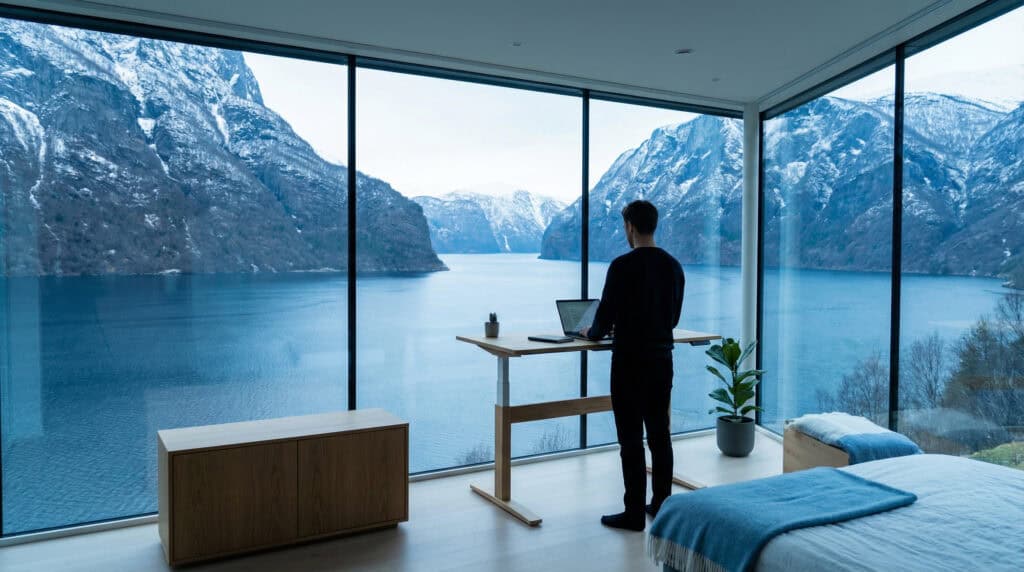
Countries like Finland, Denmark, Norway, Iceland, and Estonia are emerging as unexpected digital nomad hotspots. While significantly more expensive than traditional favorites, these destinations offer:
Unparalleled Infrastructure:
- Fastest internet speeds globally
- Reliable power and connectivity
- Excellent public transportation
- World-class healthcare systems
Quality of Life Benefits:
- Low crime rates and political stability
- Clean air and pristine natural environments
- Work-life balance baked into the culture
- Generous public services and social safety nets
Professional Growth:
- Thriving tech ecosystems and startup scenes
- Networking opportunities with innovative companies
- Access to high-caliber coworking spaces
- Cultural emphasis on innovation and creativity
The strategy emerging among experienced nomads: spend 3-6 months in premium destinations, then balance budgets with time in more affordable regions. This creates a portfolio approach to nomadic living that prioritizes both experience quality and financial sustainability.

The Africa & MENA Surge
2026 will mark Africa and the Middle East’s emergence as major nomad hubs. Kenya’s new Class N Digital Nomad permit, combined with established programs in South Africa, Namibia, Mauritius, and Cape Verde, positions the continent as a frontier destination.
Why Africa in 2026:
- Untapped Potential: Less crowded than Asian and European hotspots
- Adventure Factor: Proximity to incredible wildlife, landscapes, and cultural experiences
- Time Zone Advantages: Better alignment for European and Middle Eastern business hours
- Economic Opportunity: Growing tech hubs in Nairobi, Lagos, Cape Town, and Kigali
- Affordability: Significantly lower costs than Western destinations while offering modern amenities
The Gulf states—particularly Dubai and Abu Dhabi—continue attracting high-earning nomads with tax-free income, world-class infrastructure, and strategic positioning between East and West.
The Destination Dupe Phenomenon
Overcrowding and rising costs in traditional hotspots are driving nomads toward “destination dupes”—lesser-known cities offering similar benefits without the crowds:
Instead of Lisbon → Porto or Coimbra (Portugal) Instead of Barcelona → Valencia or Málaga (Spain) Instead of Bali → Lombok or Sumba (Indonesia) Instead of Mexico City → Guadalajara or Oaxaca (Mexico) Instead of Bangkok → Da Nang (Vietnam) or George Town (Malaysia)
These secondary cities offer authentic local experiences, lower costs, and growing nomad communities without the saturation of their famous counterparts.
Technology Transformations: AI, VR, and the Future of Remote Work
Technology continues reshaping every aspect of digital nomad life. 2026 will see the integration of tools and platforms that fundamentally change how nomads work, collaborate, and manage their lifestyle.
The AI Revolution in Remote Work
Artificial Intelligence has moved from novelty to necessity for digital nomads. By 2026, AI integration will be standard across nomadic work:
AI-Powered Productivity:
- Automated scheduling across multiple time zones with Clockwise and Reclaim.ai
- AI-enhanced communication tools like Grammarly Business ensuring professional, culturally appropriate messaging
- Project management platforms like ClickUp using AI to prioritize tasks and predict bottlenecks
- Noise-canceling AI (Krisp.ai) enabling clear calls from any environment
New AI-Native Careers: The roles leveraging generative AI are on the rise and perfectly suited to nomadic work:
- Prompt engineering and AI content quality assurance
- Automation scripting and workflow optimization
- AI training and fine-tuning specialists
- Synthetic content creation and editing
Intelligent Travel Planning: AI tools will help nomads optimize destinations based on personal preferences, budget, work requirements, and even climate predictions. Platforms will suggest optimal timing, visa strategies, and housing options through machine learning algorithms.
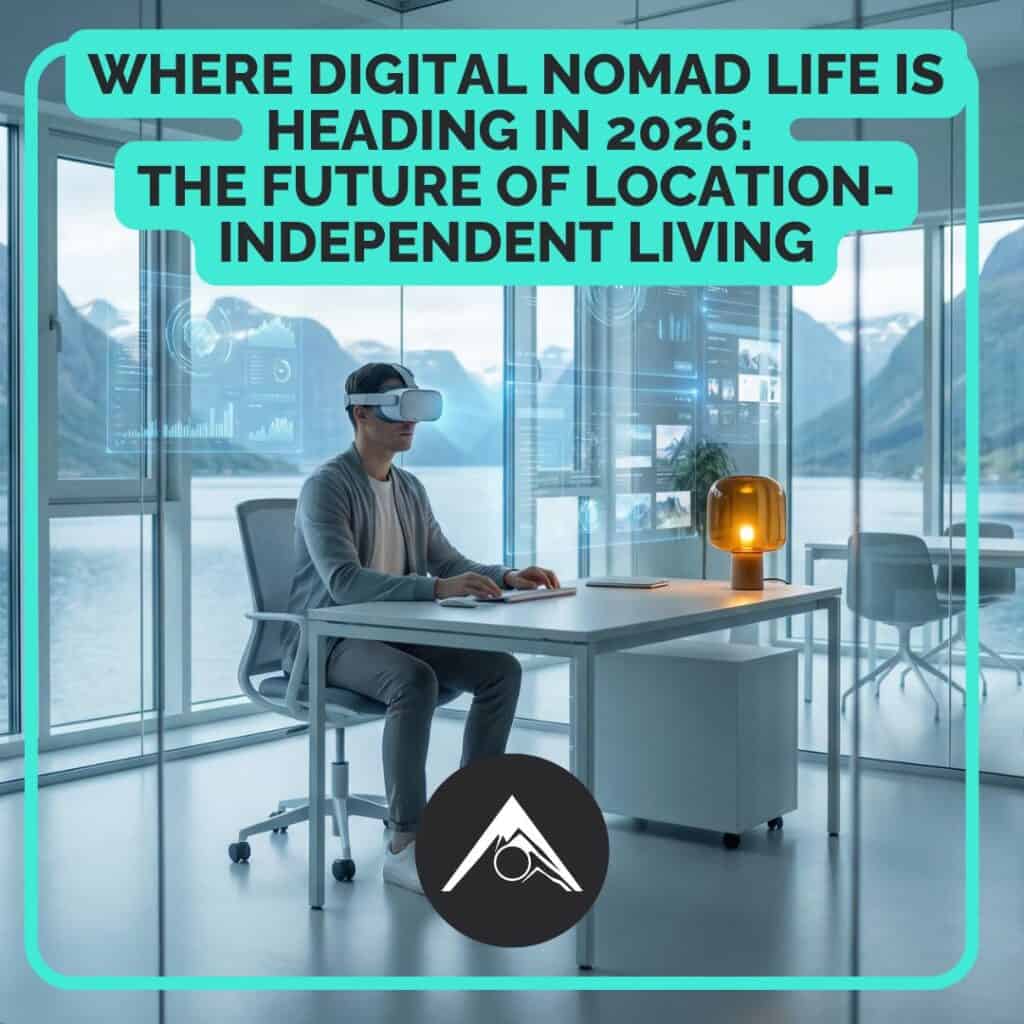
Virtual Reality Meets Remote Work
While VR hasn’t yet revolutionized daily work, 2026 marks the tipping point. Lighter, more affordable VR headsets combined with improved platforms create new possibilities:
Immersive Collaboration:
- Virtual reality meeting spaces replicating in-person interaction
- Shared virtual workspaces where remote teams “sit together”
- VR-enabled training and onboarding experiences
- Virtual coworking rooms bridging geographical distances
The Metaverse for Nomads: Digital nomads will increasingly gather in virtual spaces—attending conferences, networking events, and social gatherings without physical travel, reducing carbon footprints while maintaining community connection.
Blockchain and Digital Identity
Decentralized identity solutions and blockchain-based systems will simplify visa applications, cross-border payments, and credential verification. Nomads in 2026 will benefit from:
- Streamlined visa processing using verified digital identities
- Cryptocurrency adoption for international transactions
- Smart contracts automating rental agreements and freelance payments
- Portable professional credentials recognized globally
The Sustainability Reckoning: Green Nomadism Takes Center Stage
As climate awareness intensifies, the environmental impact of digital nomadism can no longer be ignored. 2026 marks a critical shift toward sustainable nomadic practices driven by both ethics and necessity.
The Carbon Footprint Reality
Digital nomads face a paradox: while remote work reduces daily commuting and office energy use, frequent international travel significantly increases individual carbon footprints. The community is responding with concrete solutions:
Slow Travel as Environmental Strategy: Extended stays (3-6 months per location) dramatically reduce flight frequency. Nomads staying longer emit 74% less CO2 than average Americans, according to recent studies.
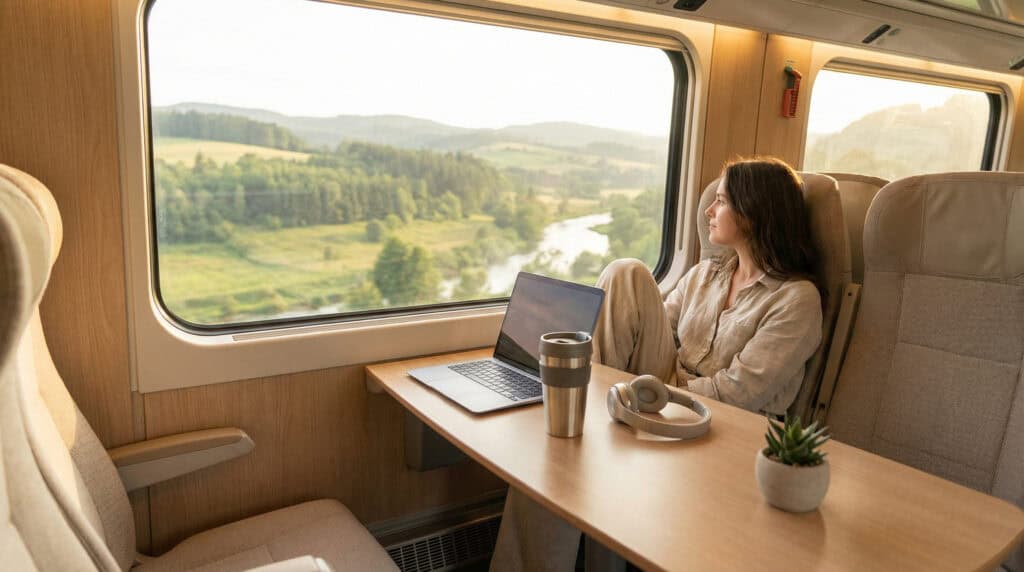
Train Over Plane: High-speed rail networks in Europe and Asia make overland travel increasingly viable. Nomads are choosing trains for regional travel, particularly in the European Union, reducing emissions while enabling productive work time aboard WiFi-equipped trains.
Carbon Offsetting: More nomads are calculating and offsetting their carbon footprints through verified programs. Some coworking spaces and coliving communities are building offsets into membership fees.
Destination Selection Based on Climate: Nomads are considering climate stability when choosing locations, avoiding areas vulnerable to extreme weather, water scarcity, or climate-induced instability.
Sustainable Nomad Practices
The conscious nomad movement will gain significant momentum in 2026:
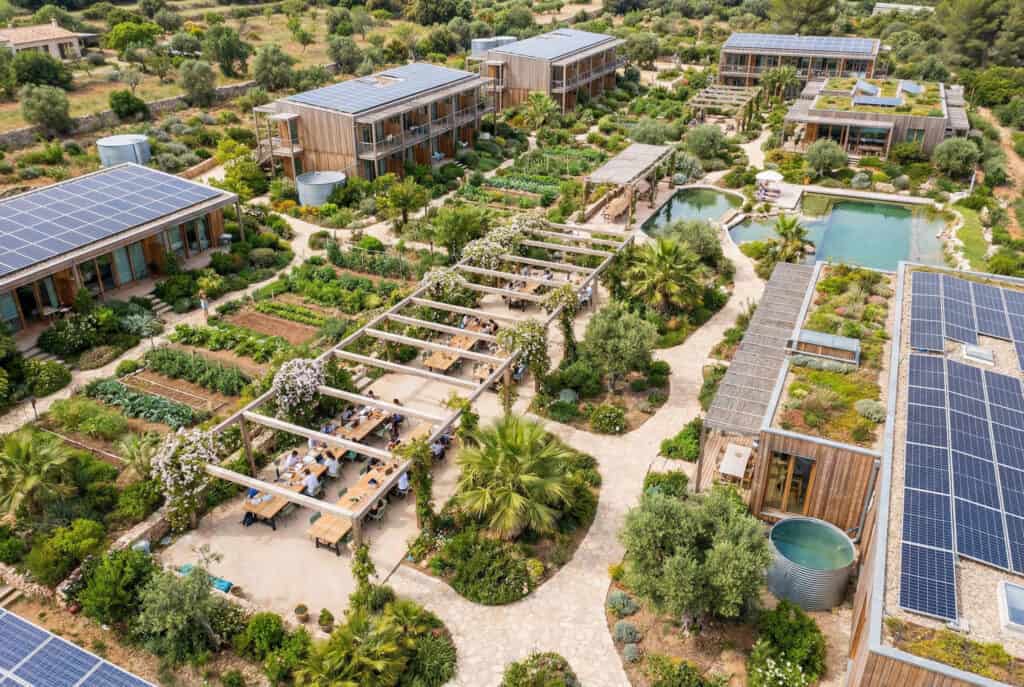
Eco-Friendly Accommodations: Green hotels, sustainable coliving spaces, and eco-conscious Airbnb hosts prioritizing energy efficiency, water conservation, and waste reduction are becoming selection criteria.
Off-Season Travel: Strategic timing reduces pressure on overtourism hotspots while spreading economic benefits throughout the year. Off-season travel also means lower carbon impact from reduced infrastructure strain.
Local Economy Support: Nomads are increasingly conscious about supporting local businesses, farmers’ markets, and environmentally responsible vendors rather than international chains.
Minimal Packing: The minimalist approach reduces transportation fuel consumption and encourages mindful consumption.
Climate Migration Patterns
Climate change itself is influencing destination choices. Nomads in 2026 will increasingly select locations based on:
- Comfortable year-round temperatures (avoiding extreme heat or cold)
- Low risk of natural disasters (hurricanes, wildfires, floods)
- Water security and resource stability
- Political stability in the face of climate pressures
This creates new opportunities for temperate regions with stable climates while challenging traditional tropical destinations facing rising temperatures and extreme weather.
Policy and Compliance: The Maturing Regulatory Landscape
The legal framework surrounding digital nomadism is rapidly evolving. 2026 will bring both opportunities and new complexities as governments worldwide refine their approaches.
Visa Program Expansion and Evolution
By 2026, expect approximately 80-85 countries to offer dedicated digital nomad visas—up from 73 in 2025. However, the evolution isn’t just about numbers:
From Minimal Viable Product to Mature Programs: Early digital nomad visas were rushed responses to pandemic opportunities. Second-generation programs launching in 2026 will feature:
- Clearer pathways to permanent residency and citizenship
- Integration with local business ecosystems
- Community participation requirements
- Structured tax frameworks avoiding ambiguity
Regional Convergence: The European Union and OECD are pushing for standardization of tax and social security rules, creating more predictable frameworks for nomads moving between countries.
Family-Friendly Evolution: More visas explicitly accommodating families, with clear provisions for children’s education, dependent healthcare, and family reunification.
The Compliance Challenge
As programs mature, the “gray area” disappears. Governments are increasing enforcement of tax and social security obligations:
Tax Complexity:
- Day-counting requirements becoming stricter
- Dual taxation risks requiring expert navigation
- Reporting obligations for foreign-earned income intensifying
- Platforms like Localyze helping manage cross-border compliance
Social Security Obligations: Nomads must navigate home country social security systems while potentially owing contributions in host countries for longer stays.
Business Registration Requirements: Some countries require nomads to register businesses locally after certain duration thresholds, adding administrative complexity.
The New Normal: 2026 nomads will need to be more sophisticated about legal compliance, or work with professionals who can navigate the increasingly complex regulatory landscape.

The Slowmad Majority: Intentional Long-Term Stays
The travel pattern evolution continues accelerating. By 2026, “slowmading” will be the dominant approach among experienced nomads, fundamentally changing what digital nomadism looks like.
Why Slower Wins
Multiple factors are driving the shift toward extended stays:
Compliance Simplification: Fewer moves mean simpler tax situations and less visa management. Staying under 183 days per country while maintaining 3-4 month stays provides optimal flexibility.
Cost Efficiency: Long-term rentals offer 30-50% savings over shorter stays. Established routines mean knowing where to find affordable groceries, services, and experiences.
Productivity Optimization: Constant movement kills creativity and deep work. Nomads in 2026 prioritize protected time for meaningful professional contributions.
Mental Health: Burnout prevention through stability. The slowmad model provides adventure without the exhaustion of perpetual transition.
Community Building: Real relationships require time. Three months provides space for genuine friendships and local integration.
The Portfolio Location Strategy
Successful 2026 nomads will think in portfolios:
The Base Hub Model: Establish 2-3 favorite cities where you return regularly. Maintain relationships, storage, and local identity while rotating between them throughout the year.
The Seasonal Circuit: Follow optimal weather and life phases: winter in tropical destinations, summer in Europe, shoulder seasons in moderate climates.
The Project-Based Approach: Align locations with work intensity. Choose quiet productivity havens for heads-down project phases, vibrant cities for networking and creative collaboration.
Demographic Shifts: Who’s Nomading in 2026
The digital nomad community is becoming more diverse, inclusive, and representative of global society.
The Rise of Female Nomads
Women’s participation in digital nomadism continues climbing, with projections suggesting near gender parity by 2027-2028. In 2026, expect:
- Women-Focused Communities: Expanding networks like Girls Gone Nomad, Remote Year Women’s Edition, and female-focused coliving spaces
- Solo Female Safety Resources: Enhanced platforms providing real-time safety information and community support
- Career Opportunities: Growth in online entrepreneurship particularly appealing to women seeking flexibility around family planning
Gen Z Enters the Scene
The first fully digital-native generation brings fresh perspectives:
Values-Driven Choices:
- Prioritizing sustainability and ethical travel
- Seeking authentic cultural experiences over Instagram moments
- Building personal brands and portfolio careers from the start
- Comfortable with AI tools and emerging technologies
Financial Realities:
- Entering markets with student debt and housing affordability challenges
- Viewing nomadism as practical financial strategy rather than luxury
- Leveraging creator economy and gig platforms from early careers
Family Nomadism Accelerates
By 2026, expect:
- 2 million+ nomadic families globally
- Worldschooling infrastructure maturation: Standardized curricula, accredited programs, and peer networks
- Family-friendly visas: More countries explicitly welcoming families with education provisions
- Multigenerational travel: Families traveling with grandparents, combining care responsibilities with adventure
The Semi-Retired Segment
Professionals in their 50s and 60s are embracing location independence:
- Skill leverage: Decades of expertise enabling high-value consulting while traveling
- Financial stability: Established careers providing cushion for lifestyle experimentation
- Health consciousness: Seeking active, engaging retirement alternatives
- Timing flexibility: No school schedules or early-career advancement pressures
The Challenges Ahead: What 2026 Nomads Must Navigate
While the future is bright, real challenges persist:
Return-to-Office Pressures
Not all companies embrace remote flexibility. Traditional employees face:
- Hybrid mandates: 2-3 office days per week limiting full nomadism
- Career advancement concerns: Visibility bias favoring in-office workers
- Company culture shifts: Some organizations pulling back from pandemic-era flexibility
The Solution: Independent workers—freelancers, contractors, entrepreneurs—will dominate 2026 nomad demographics as they control their own location policies.
Job Market Disruption
AI and automation threaten some nomad-friendly roles:
- Content mills declining: AI-generated content reducing demand for basic writing
- Customer service automation: Chatbots handling routine support roles
- Design commoditization: Template-based design tools reducing custom work needs
The Opportunity: Nomads who position themselves in AI-augmented roles rather than AI-replaceable ones will thrive. Focus on strategy, creativity, human connection, and complex problem-solving.
Isolation and Mental Health
Despite better infrastructure, loneliness remains challenging:
- Transient relationships: Even with slowmading, friendships face expiration dates
- Remote burnout: Blurred work-life boundaries without office structure
- Identity questions: “Where are you from?” becomes complicated to answer
The Response: Intentional community building, regular therapy via telehealth platforms, and maintaining home base relationships.
Rising Costs in Popular Destinations
Inflation and nomad influx are pricing some workers out of favorite cities:
- Lisbon, Barcelona, Mexico City: Costs rising 20-40% since 2020
- Bali neighborhoods: Canggu and Ubud experiencing significant price increases
- Local housing pressure: Some destinations implementing restrictions on short-term rentals
The Adaptation: Diversification to emerging destinations, longer stays for better rates, and alternative neighborhoods within expensive cities.
New Work Models: Beyond Traditional Employment
2026 will see the continued evolution of work arrangements perfectly suited to nomadic life:
The Portfolio Career
Instead of one job, nomads combine multiple income streams:
- Part-time consulting
- Freelance projects
- Digital products and courses
- Investment income
- Content creation and sponsorships
This diversification provides resilience against any single income source disappearing.
The Fractional Executive
Experienced professionals offer executive-level services part-time to multiple companies:
- Fractional CMOs, CFOs, CTOs, and COOs
- Project-based leadership engagements
- High-value strategic work with location independence
- Command premium rates while maintaining flexibility
The Creator-Entrepreneur Hybrid
Content creation meets product business:
- Building audiences through platforms (YouTube, podcasts, newsletters)
- Monetizing through digital products, courses, or communities
- Leveraging location independence as content itself
- Authentic storytelling from diverse global locations
The Async-First Revolution
Companies designing work around asynchronous communication:
- Eliminates meeting-heavy cultures requiring specific time zones
- Documentation and written communication over video calls
- Results-focused evaluation over time-based assessment
- Perfect for globally distributed, nomadic teams
Preparing for Your 2026 Nomad Journey: Practical Steps
If you’re planning to embrace digital nomadism in 2026, here’s how to position yourself:
Skill Development Focus
Invest in areas with growth potential:
AI Literacy:
- Learn to work with AI tools effectively
- Position yourself as AI-augmented rather than AI-replaceable
- Understand prompt engineering and AI workflows
Async Communication:
- Master written communication
- Document creation and knowledge management
- Video recording and editing for asynchronous updates
Cross-Cultural Competence:
- Language learning (Spanish, Portuguese, French remain most valuable)
- Cultural intelligence and adaptation skills
- Global business etiquette understanding
Financial Preparation
Build Emergency Reserves: 6-12 months of expenses in accessible accounts. The nomad life includes unexpected costs and income fluctuations.
Understand Tax Obligations: Consult with international tax professionals before departing. Establish compliant systems from day one.
Create Passive Income Streams: Invest in dividend-paying stocks, real estate, or digital products providing base income security.
Optimize Banking: Use nomad-friendly banks (Wise, Revolut) minimizing international transaction fees and offering multi-currency accounts.
Mindset Cultivation
Embrace Uncertainty: Plans change. Visas get denied. Weather disappoints. Flexibility trumps rigid expectations.
Practice Minimalism: Letting go of possessions liberates. Everything you own should fit in a carry-on and personal item.
Develop Self-Discipline: Without office structure, you’re responsible for your own productivity. Habits and systems replace environmental accountability.
Commit to Continuous Learning: The landscape changes rapidly. Stay informed, adapt quickly, and remain open to new possibilities.
The 2026 Digital Nomad Profile: A Snapshot
As we envision the typical 2026 nomad, here’s who they might be:
Age: 35 years old (median)
Background: College-educated, likely with graduate degrees; works in tech, marketing, design, or consulting
Work Arrangement: 40% traditional employees (with explicit remote permissions), 40% independent contractors/freelancers, 20% business owners/entrepreneurs
Income: $95,000-130,000 annually (median range)
Travel Style: Slowmad approach—3-4 locations per year with 3-6 month stays in each
Destinations: Portfolio of 2-3 favorite bases plus exploratory trips to emerging locations
Technology: Fully integrated AI tools, VR-capable, blockchain wallet for crypto transactions
Values: Sustainability-conscious, prioritizing quality of life over cost savings alone, community-oriented
Challenges: Managing tax compliance, maintaining relationships across time zones, avoiding burnout
Goals: Personal growth through cultural immersion, professional development through global networking, building meaningful life experiences
The Future Is Ours to Shape: Conclusion
As we stand on the edge of 2026, the digital nomad future has never been brighter or more accessible. What began as a fringe lifestyle has evolved into a mainstream movement reshaping how millions work, live, and find meaning in the 21st century.
The path forward isn’t without challenges. Climate change, regulatory complexity, job market disruption, and the fundamental tension between freedom and stability will continue testing the community. But with these challenges come opportunities—to build better systems, create more sustainable practices, and design lives aligned with our deepest values.
The nomads of 2026 will be more diverse, more skilled, more conscious, and more connected than ever before. They’ll leverage cutting-edge technology while staying grounded in human connection. They’ll explore the world while treading lightly on the planet. They’ll build careers without boundaries while creating communities without borders.
This isn’t just about working from beaches or mountains—though those remain beautiful perks. It’s about fundamentally rethinking what’s possible when we refuse to accept that our zip code should determine our destiny. It’s about choosing freedom without sacrificing security, adventure without abandoning responsibility, and exploration without exploitation.
The Break Outwards Vision for 2026
At Break Outwards, we’re not just watching these trends unfold—we’re actively shaping the future of digital nomadism through our transformative experiences, educational resources, and global community.
Our 2026 Commitments:
Sustainable Travel Leadership: Every Break Outwards retreat and experience incorporates carbon offsetting, supports local communities, and promotes environmental stewardship.
Skills for Tomorrow: Our Nomad Academy curriculum evolves constantly, ensuring our community members possess the AI literacy, async communication skills, and cross-cultural competence to thrive in tomorrow’s marketplace.
Inclusive Community Building: We’re committed to diversity in our programs, with specific initiatives supporting female nomads, families, and underrepresented communities in location-independent living.
Destination Pioneering: Break Outwards will lead exploratory experiences in emerging destinations—from Africa’s rising tech hubs to Nordic innovation centers—giving our community early access to tomorrow’s hotspots.
Thought Leadership: Through research, reporting, and community insights, we’re documenting and sharing the evolution of digital nomadism, helping shape policies and practices that benefit the entire community.
Your 2026 Awaits
The question isn’t whether digital nomadism has a future—it’s what role you’ll play in shaping that future. Will you be among the pioneers exploring Africa’s emerging destinations? Will you embrace AI tools to multiply your productivity and value? Will you model sustainable practices that prove location independence and environmental responsibility aren’t contradictory?
The world is opening wider every day. Technologies are removing barriers that once seemed insurmountable. Communities are forming that provide both freedom and belonging. The opportunity to design a life on your terms has never been more attainable.
2026 won’t be perfect. There will be visa rejections and flight delays, loneliness and culture shock, failed experiments and hard-won lessons. But there will also be sunrises in places you never imagined, friendships that span continents, work that matters regardless of location, and the profound satisfaction of living according to your deepest values.
The world is our office. Curiosity is our currency. And the adventure is just beginning.
Are you ready to break outward and discover what 2026 has in store? The journey of a lifetime awaits, and it starts with a single bold decision to live differently.
Join us. The future of work, travel, and life itself is being written right now—and you’re invited to hold the pen.
Stay Connected
Explore What’s Possible:
- Visit BreakOutwards.com to discover our 2026 retreat calendar
- Enroll in future-focused courses at Nomad Academy
- Join our community: @breakoutwards on Instagram and Facebook
Continue Learning:
- Subscribe to our newsletter for monthly trend updates
- Join Break Outwards community forums for real-time nomad insights
- Attend our virtual workshops on 2026 destination planning
The world is waiting. Let’s wander onward together into the extraordinary possibilities of 2026.