
Table Of Contents
—
The Digital Nomad Revolution: Mental Health In Motion
At Break Outwards, we believe that curiosity is our currency and the world is our office. Digital nomads are rewriting the rules of work and life, choosing adventure over routine and freedom over the familiar. But as the globe becomes your workspace, mental health often becomes the silent travel companion.
The number of digital nomads is growing fast—over 35 million people worldwide now call themselves location-independent professionals. According to the 2023 Global Nomad Survey, 61% report both higher job satisfaction and increased stress. Why? Because the journey is incredible, but it’s not always easy.
Mental health for digital nomads is a vital, often overlooked topic that shapes the quality of this lifestyle.
Let’s dive in and explore how you can thrive mentally while living the adventure. Real-world tips, practical strategies, and inspiring stories await. Whether you’re already working from a Bali beach or planning your first leap, this guide is your roadmap to well-being.
—
Unique Mental Health Challenges For Digital Nomads
Traveling the world brings excitement, but also unique hurdles for digital nomad mental health. Here’s what often surprises new nomads:
1. Loneliness And Isolation
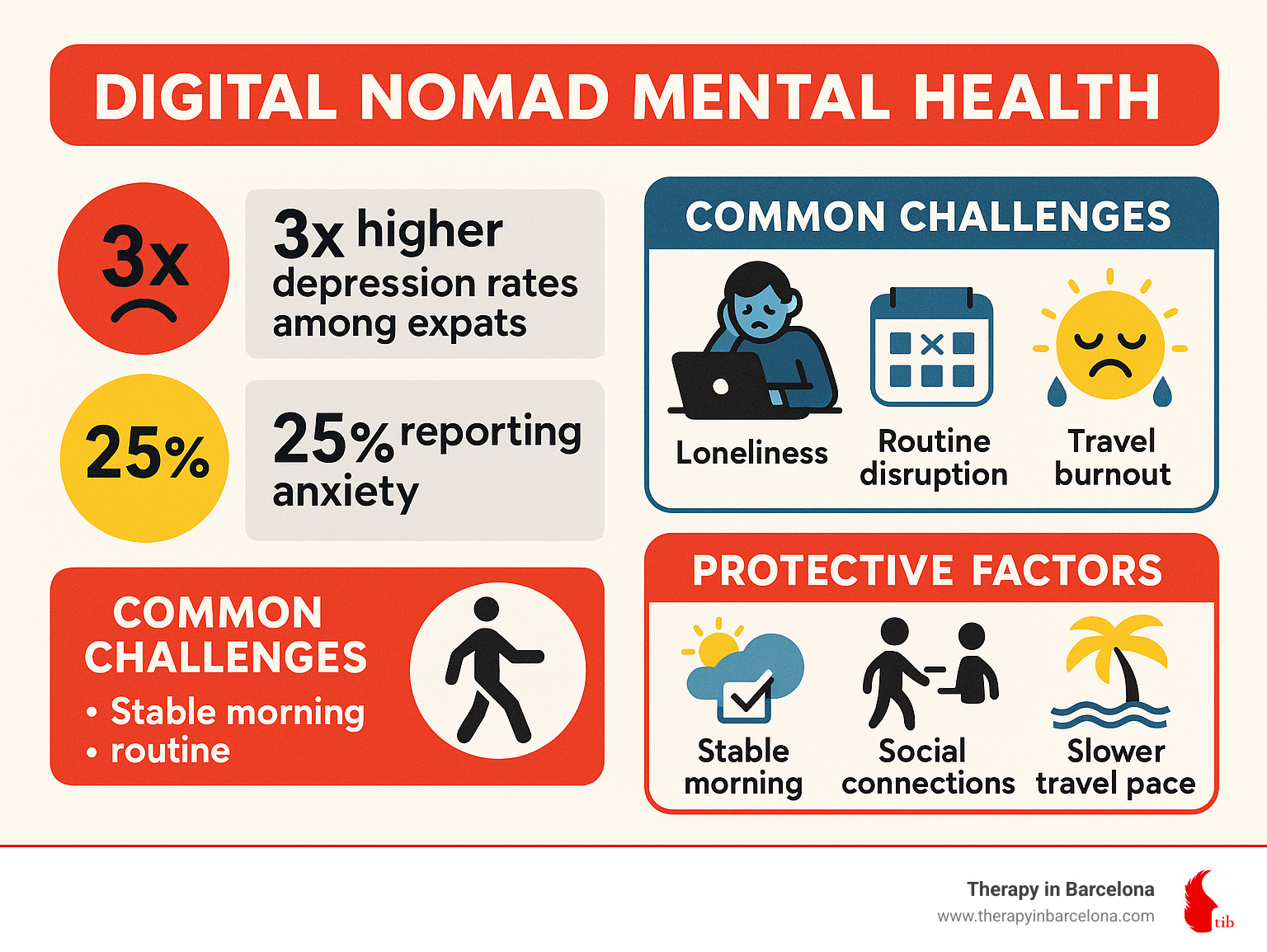
Even in bustling cities, nomads can feel alone. Remote work means fewer face-to-face interactions. According to Buffer’s State of Remote Work 2023, 22% of remote workers struggle with loneliness. Moving often makes it harder to form deep relationships.
2. Lack Of Routine
Constant change is thrilling, but routines are grounding. Without a steady schedule, sleep patterns, eating habits, and exercise can suffer. This instability can lead to anxiety and fatigue.
3. Culture Shock And Adaptation
Every country has its own customs, food, and language. Adapting quickly can be stressful. Culture shock isn’t just for tourists—it affects nomads deeply, sometimes causing homesickness or confusion.
4. Work-life Balance Issues
When your office is everywhere, it’s easy to blur boundaries. Many nomads find themselves working odd hours or overworking. The freedom can become overwhelming, leading to burnout.
5. Visa And Legal Uncertainty
Not knowing if you can stay in a country, or facing sudden changes in visa laws, adds another layer of stress. Legal issues can disrupt plans and trigger anxiety.
6. Financial Pressure
Income may fluctuate. Unexpected expenses—like medical emergencies or equipment failure—can hit hard. Financial insecurity is a top concern for nomads.
7. Health Care Access
Getting quality healthcare abroad isn’t always simple. Insurance confusion, language barriers, and unfamiliar systems make it stressful to manage health.
8. Digital Fatigue
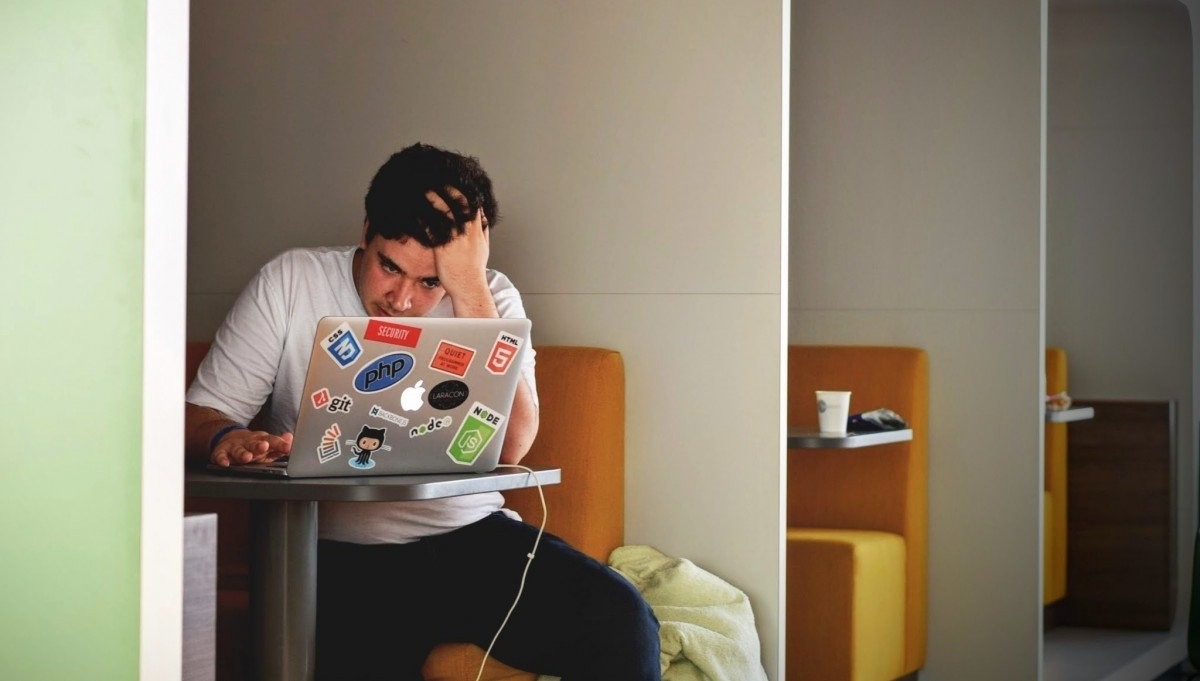
Online meetings, constant device use, and social media can drain energy. Screen time is higher for nomads, increasing risk of digital burnout.
—

Credit: www.bedndesk.com
Practical Strategies For Wellbeing On The Road
Staying mentally strong is possible, even when life is unpredictable. These real-world strategies help you build resilience wherever you roam.
1. Stay Connected
- Join local coworking spaces to meet other nomads.
- Use apps like Meetup or Facebook Groups for social events.
- Schedule regular calls with friends and family.
2. Create Micro-routines
- Start your day with a ritual: Coffee, meditation, or a walk.
- Set fixed work hours—even if your location changes.
- Use habit trackers to stay consistent.
3. Mindfulness And Meditation
- Try meditation apps (Headspace, Calm).
- Practice mindfulness during travel: Notice sights, sounds, and feelings.
- Take short breaks to breathe deeply and reset.
4. Exercise Anywhere
- Use YouTube workouts or fitness apps.
- Walk or run in local parks.
- Try yoga or stretching routines in your accommodation.
5. Healthy Eating
- Shop at local markets for fresh food.
- Cook simple meals—avoid fast food traps.
- Stay hydrated, especially in new climates.
6. Seek Professional Help
- Find online therapists specializing in remote work.
- Many services offer video sessions in English.
- Don’t hesitate to ask for help—mental health matters everywhere.
7. Limit Screen Time
- Set device-free hours daily.
- Use apps to monitor usage and block distractions.
- Replace scrolling with reading or local exploration.
8. Plan Finances Wisely
- Build an emergency fund.
- Track expenses with apps like YNAB or Revolut.
- Consider income diversification: Freelance, passive income, consulting.
9. Embrace Local Culture
- Learn basic phrases in the local language.
- Attend community events and festivals.
- Try new foods and customs—curiosity fuels well-being.
10. Practice Gratitude
- Keep a journal of daily highlights.
- Celebrate small wins: New friends, successful projects, beautiful views.
- Remind yourself why you chose this lifestyle.
—
Social Connection And Community
No one thrives alone. Nomad life is richer with community. Here’s how to build your tribe:
Coworking Spaces
Coworking hubs are more than offices—they’re gathering spots for nomads, freelancers, and remote teams. You’ll find events, workshops, and instant friends. For example, Hubud in Bali and Selina in Lisbon are favorites.
Online Communities
- Join Slack groups, Discord channels, and Facebook communities.
- Active forums like Nomad List and Remote Work Hub connect thousands.
Local Meetups
- Attend language exchanges, hiking groups, or tech events.
- Use Meetup.com or Eventbrite for listings.
Volunteering
Giving back creates meaning. Volunteer in local projects, teach skills, or help at events. You’ll make connections and feel part of the place.
Building Relationships
- Stay longer in one location to form deeper bonds.
- Invite others for coffee or co-work sessions.
- Be open, curious, and respectful—every culture is a new adventure.
—
Credit: www.therapyinbarcelona.com
Building Routine And Productivity
Freedom is fantastic, but structure keeps you sane. Here’s how to balance both:
Morning Rituals
Start with something consistent, like journaling, stretching, or planning your day. Even small rituals anchor you, no matter where you are.
Work Blocks
Divide your day into focused work sessions and breaks. The Pomodoro Technique is popular: 25 minutes work, 5 minutes rest.
Workspace Optimization
Find the right spot—quiet, comfortable, and inspiring. Coworking spaces or cozy cafés work well. Good Wi-Fi is a must.
Productivity Tools
Apps like Trello, Notion, and Google Workspace help track tasks and projects. Use cloud storage for easy access anywhere.
Avoid Overwork
Set clear boundaries. Use alarms or reminders to stop working and start living. Productivity isn’t about hours—it’s about results.
Nomad Productivity Table
Here’s a quick comparison of popular productivity tools for digital nomads:
| Tool | Features | Best For | Platform |
|---|---|---|---|
| Trello | Boards, lists, cards | Task management | Web, Mobile |
| Notion | Notes, databases, calendar | Project planning | Web, Mobile |
| Google Workspace | Docs, Sheets, Drive | Collaboration | Web, Mobile |
| Slack | Chat, channels, integrations | Team communication | Web, Mobile |
—
Financial Security And Stress
Money matters more when you’re on the move. Financial worries can impact digital nomad mental health, so take control:
Emergency Fund
Aim to save 3-6 months of living expenses. This buffer reduces anxiety during slow work periods or emergencies.
Budgeting Apps
Track spending and income. Apps like YNAB, Revolut, and Wise help you manage money across currencies.
Income Streams
Diversify your income. Many nomads freelance, consult, teach online, or build passive income (like blogging or selling digital products).
Health Insurance
Always have international health coverage. Research plans for nomads—companies like SafetyWing or World Nomads specialize in this.
Financial Planning Table
Compare common finance tools for digital nomads:
| App | Key Feature | Best For | Fees |
|---|---|---|---|
| Revolut | Multi-currency | Travel spending | Low/Free |
| Wise | International transfers | Moving money globally | Low |
| YNAB | Budgeting | Expense tracking | Paid |
| SafetyWing | Health insurance | Medical emergencies | Monthly |
Common Mistakes
- Underestimating cost of living.
- Ignoring currency exchange rates.
- Skipping health insurance.
—
Tools And Tech For Mental Wellness
Technology isn’t just for work—it can boost your mental health too. Here’s how:
Meditation And Mindfulness Apps
- Headspace, Calm, Insight Timer offer guided meditation.
- Track progress and set reminders.
Therapy Platforms
- BetterHelp, Talkspace connect you to licensed therapists worldwide.
- Many accept international clients and offer flexible scheduling.
Sleep And Wellness Apps
- Sleep Cycle tracks patterns and improves rest.
- Streaks helps build healthy habits.
Digital Detox Tools
- Forest app encourages device-free time.
- FocusMe blocks distracting websites.
Comparison Table: Mental Wellness Apps
| App | Main Feature | Platform | Cost |
|---|---|---|---|
| Headspace | Meditation | Web, Mobile | Paid |
| BetterHelp | Online therapy | Web, Mobile | Paid |
| Sleep Cycle | Sleep tracking | Mobile | Free/Paid |
| Forest | Digital detox | Mobile | Paid |
—
Data And Trends: Nomad Mental Health Today
Let’s look at the numbers and trends shaping digital nomad mental health:
- In 2023, 35 million people identified as digital nomads globally (Upwork).
- 61% of nomads say their mental health improved due to location freedom, but 56% report higher stress (Global Nomad Survey).
- 22% of remote workers struggle with loneliness (Buffer).
- Most nomads stay in one location 1-3 months (Nomad List), but those who stay longer report better mental health.
Non-obvious Insights
- Staying longer in one place improves mental health by creating stability and deeper connections.
- Learning local language basics helps reduce stress and builds confidence, even if you’re only in a country for a short time.
For more detailed statistics and research, visit the Wikipedia Digital Nomad page.
—
Credit: www.samwoolfe.com
Frequently Asked Questions
What Are The Biggest Mental Health Risks For Digital Nomads?
The main risks are loneliness, lack of routine, culture shock, and financial stress. Moving often and working remotely can make it harder to build strong relationships or maintain healthy habits.
How Can Digital Nomads Find Mental Health Support Abroad?
Many therapists offer online sessions. Apps like BetterHelp and Talkspace connect you to professionals worldwide. Local expat groups and coworking spaces often share resources for wellness and support.
What Should I Do If I Feel Lonely While Traveling?
Reach out to local nomad communities, join coworking spaces, attend meetups, and schedule regular calls with friends and family. Staying connected is key to fighting isolation.
Is It Possible To Maintain Work-life Balance As A Digital Nomad?
Yes. Build routines, set clear work hours, and use productivity tools. Balance is about boundaries—make time for adventure, rest, and social connection.
Which Tools Are Best For Digital Nomad Mental Health?
Top options include Headspace (meditation), Sleep Cycle (rest), BetterHelp (therapy), and Forest (digital detox). Choose tools that fit your needs and lifestyle.
—
Call To Action
Ready to take control of your digital nomad mental health and thrive wherever you work? Join the Break Outwards community—explore guides on productivity, coworking, financial planning, and remote work tools. Connect with fellow adventurers, share your story, and discover new ways to live boldly.
Visit [breakoutwards.com](https://breakoutwards.com) and remember: The World Is Our Office. Curiosity Is Our Currency. Your journey to freedom, exploration, and community starts now.