

Will AI replace you or empower you? That question haunts many location-independent workers. Here’s the truth: AI won’t replace digital nomads—it will transform how you work, opening doors you never imagined. By 2026, roughly 43 million people globally embrace this lifestyle. That number keeps climbing, and AI and digital nomads are becoming an inseparable duo.
“AI isn’t replacing me—it’s expanding what I can do,” shares one project manager. “It reduces energy spent on repetitive tasks and gives me more headspace for strategic, human-centric delivery.”
AI handles the mundane. You handle the nuance, empathy, and connection no algorithm can replicate. This shift creates space for deeper travel, genuine remote work, and true freedom. Ready to thrive? Let’s map your roadmap for the AI era—where AI and digital nomads redefine what’s possible together.
Key Takeaways
AI handles routine tasks like email and research. This frees your time for creative work and deeper travel.
New high-paying remote roles like AI Engineer offer salaries over $180,000. You can earn these from anywhere.
The slowmad trend lets you stay in one place for months. AI reduces travel stress and unlocks long-stay discounts.
Develop AI literacy by learning one tool at a time. Your creativity and empathy remain irreplaceable assets.
Digital Nomads Today
The Remote Work Revolution
Think back to 2019. Most people still commuted to an office each day. Then everything changed. The pandemic forced companies to let employees handle their tasks from home. That shift stuck. Today, you can build a career without ever stepping into a traditional office. That freedom sits at the heart of the digital nomad movement. Companies now hire talent from anywhere in the world. You don’t need to live in a big city to find great opportunities. Your skills matter more than your zip code.
What does this mean for you? You need a solid workspace wherever you go. Strong wifi becomes your lifeline for connecting with clients. You rely on fast internet to communicate with colleagues. Your workspace changes with every new city. This lifestyle lets you travel the world while keeping your career intact. Remote work isn’t just a trend anymore. Remote work gives you the freedom to design your own schedule. You wake up when you want. You focus when you’re most productive. That kind of flexibility changes everything.
Growth and Demographics of the Nomad Community
The numbers tell a powerful story. By 2025, the global population of digital nomads passed 40 million people. In the United States alone, 18.5 million workers now identify as digital nomads. That’s a 153% increase since 2019. These digital nomads make up about 12% of the entire U.S. workforce. The growth shows no signs of slowing down. Experts predict the number could reach 60 million by 2030.
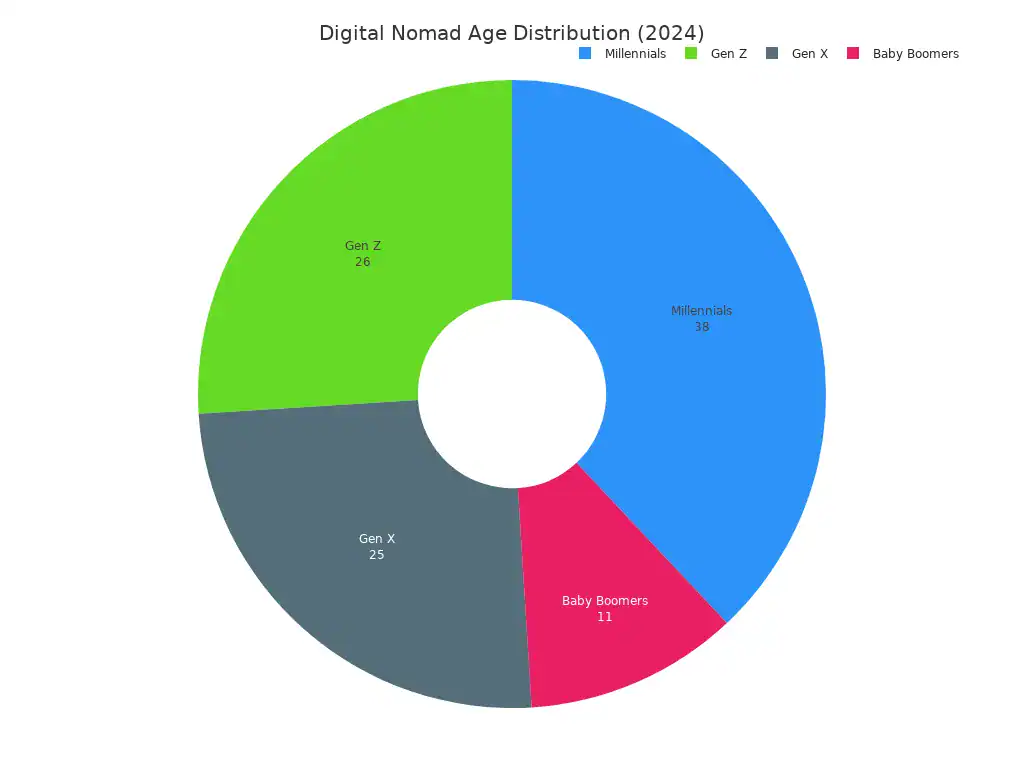
Who are these people? The average digital nomad is 37 years old. Millennials make up the largest group at 38%. Gen Z follows with 26%. Gen X accounts for 25%, and Baby Boomers represent 11%. About 59% are male, and 40% are female. Education levels are high — 90% hold a degree beyond high school. Income varies widely, but 46% report household earnings above $75,000. Most nomads hold full-time positions. About 64% are employed while 36% do freelance or part-time projects.
Countries around the world want these workers. Over 69 nations now offer digital nomad visas. These programs let nomads stay for months or even years. You get to travel to new places and explore cultures while earning a living. The community keeps growing each year. More people realize they don’t need a fixed address to build a successful career. You can always find a good wifi connection in most cities today. The freedom to live anywhere while staying connected is becoming the new normal.
AI and Digital Nomads: A New Era of Remote Work
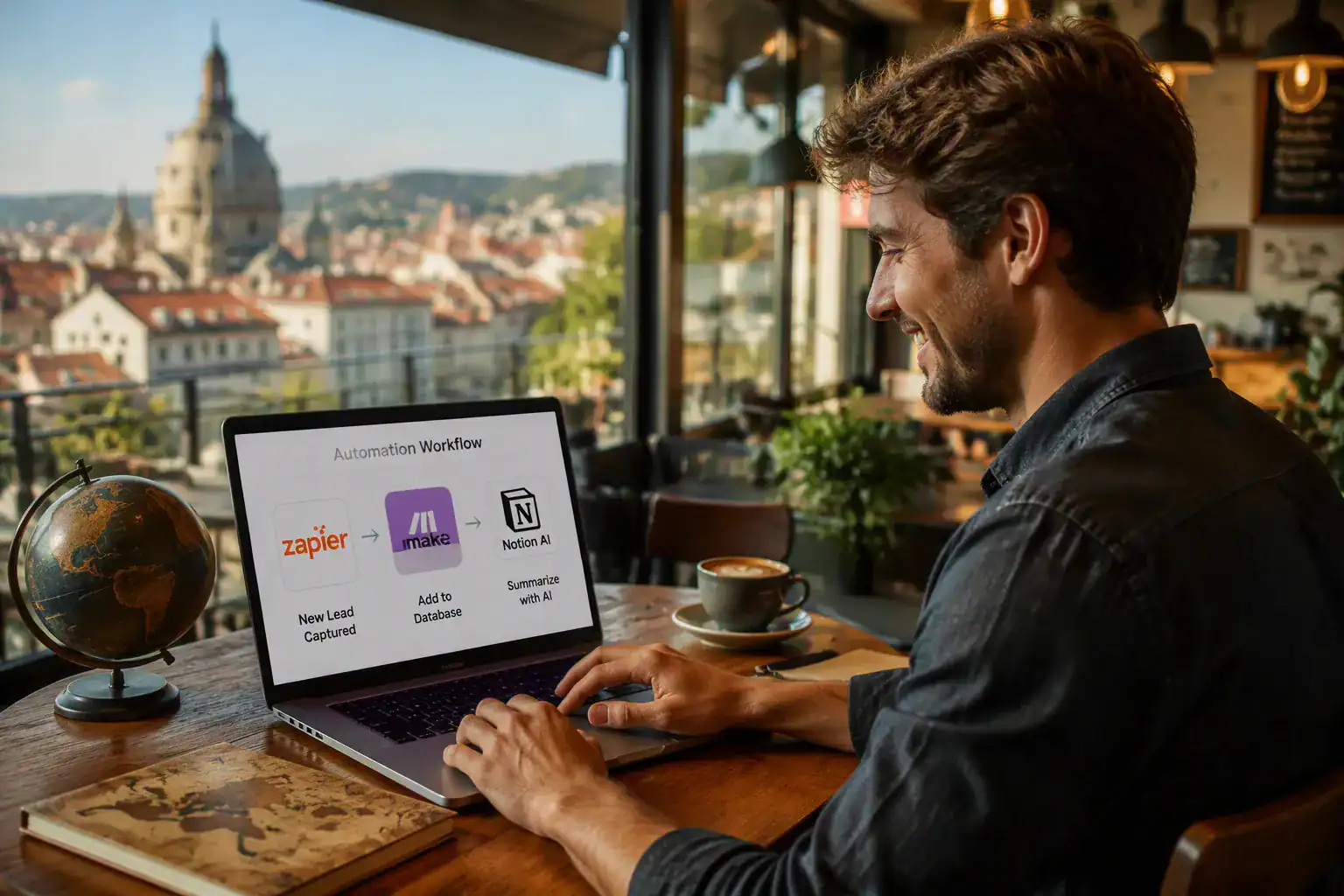
AI has evolved far beyond simple chatbots. Today, you get autonomous agents that handle research, email, and customer support. These tools directly benefit you as a digital nomad. They cut the time you spend on busywork. That leaves you more energy for the things that matter—exploring new places, connecting with people, and growing your business. The old way of doing things meant juggling endless tasks alone. Now, AI handles the heavy lifting for your remote work. You focus on the strategy and creativity that only you can provide.
According to a market report, generative AI adoption helps you complete complex tasks faster with less effort. One digital nomad shares that using AI tools to speed up repetitive tasks frees up time for creative projects. That directly boosts your overall efficiency. You can say goodbye to hours spent on admin work.
AI Tools That Automate Routine Tasks
The right tools make all the difference. Here’s a look at the most popular options for automating your daily workflow:
Tool | Primary Strength | Cost (Entry) | Example Nomad Workflow |
|---|---|---|---|
Zapier | No-code automation connecting apps | Free tier (5 Zaps); Starter $19.99/mo | New Gmail inquiry → auto-create Notion task + send acknowledgment |
Make | Complex multi-step automations with conditional logic | Free tier; Core $9/mo | Branching workflows that outgrow Zapier’s free tier |
Notion AI | Integrated workspace + AI assistance | $10/mo add-on | Writing help, summaries, and action-item extraction inside existing Notion projects |
You can start small and scale up. Here’s what different stacks look like:
Starter stack ($0/mo): Zapier Free (5 Zaps) handles basic automation; Claude/ChatGPT Free covers writing and research.
Core stack (~$48/mo): Adds Perplexity Pro for research and DeepL Pro for translation; Zapier remains free.
Professional stack (~$100/mo): Includes Notion AI ($16) and Zapier Starter ($20). This replaces a $1,500–2,500/mo virtual assistant for solo freelancers, saving 10+ hours monthly.
Platforms like ChatGPT, Claude, Grammarly, and Perplexity are increasingly part of everyday workflows for professionals. Writers use AI for outlining and editing; developers for debugging; marketers for content strategy; founders for planning. For digital nomads, AI tools are especially valuable because they reduce mental overload during travel-related decision-making (flights, visas, timezones), cutting manual effort during busy periods.
You can build a workspace that runs itself. That means more time for exploring new cities and less time staring at a screen. Good wifi is all you need to stay connected and productive. Today’s nomads are using AI to handle the busywork while they focus on what matters.
New High-Paying Careers for Digital Nomads
AI doesn’t just automate your work. It creates new career paths that pay well. One of the hottest roles right now is AI Engineer. Companies across the globe hire for this position with no location requirement. The average base salary for a remote AI Engineer in 2026 is $180,173. Total compensation averages $202,573. The range spans from $100,000 to $245,000.
Metric | Value |
|---|---|
Average Base Salary | $180,173 |
Average Additional Cash Compensation | $22,400 |
Average Total Compensation | $202,573 |
Median | $180,000 |
Salary Range | $100,000 – $245,000 |
MRJ Recruitment’s 2026 data shows the median senior AI engineer salary sitting at about $206,600, with companies accepting that hiring across borders means competing nationally.
But AI Engineer isn’t the only option. Software Engineer and Marketing Manager remain top careers for digital nomads. These roles pay well and let you travel the world. The key is building skills that match what the market needs. You can work from anywhere and earn a great income at the same time. AI and digital nomads create a powerful combination. Your location no longer limits your earning potential. A strong wifi connection and the right skills open every door.
Top Destinations for Digital Nomads in 2026
Countries with Digital Nomad Visas
More than 69 countries now roll out the welcome mat for location-independent workers. You can pick from sunny beach towns in Portugal, bustling hubs in Thailand, or cultural gems in Mexico. Each program offers different perks. Some require proof of income. Others ask for health insurance. Most let you stay for six months to two years without the usual visa headaches.
Your choice of destination shapes your entire experience. Look for places with strong wifi and affordable living costs. Check the local nomad community size too. A thriving network means easier networking and better support. Countries like Spain, Croatia, and Estonia have refined their programs to attract remote talent. They understand you bring value to their local economies. You bring skills, spending power, and a fresh perspective. That exchange benefits everyone.
The Slowmad Trend: Long-Stay Destinations
A quiet shift is reshaping how you travel. Instead of hopping between cities every few weeks, more nomads now settle in one place for months at a time. This slowmad approach reduces burnout and deepens your connection to local culture. You learn the language. You find your favorite coffee spot. You build genuine friendships. The pace feels more sustainable.
AI automation makes this lifestyle possible. With AI agents handling research, email, and customer support, you face less pressure to move. Your workload stays manageable from one location. That freedom lets you embrace long-stay living without sacrificing productivity. You can book a nomad-ready rental for three months and actually enjoy it.
The practical benefits of long-stay travel are hard to ignore. Many landlords offer long-stay discounts for extended bookings. You save money on accommodation while gaining a stable workspace. Your wifi speed matters more than ever. Look for rentals with fiber internet and reliable connections. A dedicated workspace transforms your productivity. You can build a routine that supports both work and exploration.
The slowmad trend grows because AI removes the operational pressure that once forced constant movement. Your nomad accommodation becomes a home base, not just a pit stop.
This approach changes how you plan your year. You might spend winter in Bali, spring in Lisbon, and summer in Medellín. Each long-stay destination offers a new adventure. Your travel planning becomes simpler too. Fewer flights mean less stress and lower costs. You invest that energy into meaningful experiences instead.
Lifestyle Impact on Digital Nomads
Cost of Living and Location Independence
Your budget shapes your travel freedom more than any other factor. Most digital nomads spend between $1,500 and $4,500 monthly in 2026, with the average landing around $2,247. You can live comfortably on $3,000 in Bali, Chiang Mai, Lisbon, or Medellín. Choose budget-tier cities like Ho Chi Minh City or Bangalore, and you might keep living costs under $1,200 each month.
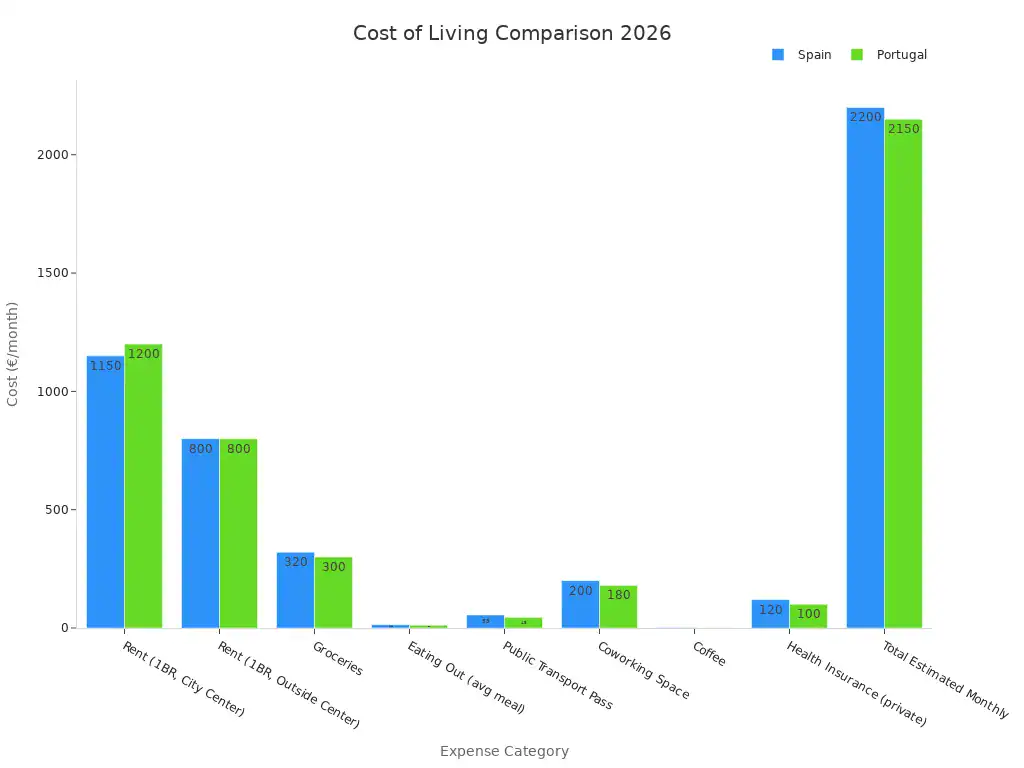
Housing eats the biggest slice of your budget. Basic apartments in budget-tier cities run $300–$500 monthly. Mid-range European destinations cost $800–$1,500. Coliving spaces offer a 20–30% discount compared to standard rentals. Airbnb runs 40–50% higher. Your workspace setup matters too. Coworking spaces cost around $180–$200 monthly in Spain or Portugal. That expense pays for reliable wifi speed and a productive environment.
The slowmad trend changes how you approach living costs. Staying longer in one place unlocks long-stay discounts from landlords. Many properties offer reduced rates for three-month bookings. You also gain a stable workspace with fiber internet. That consistency boosts your remote work output. You spend less on flights and more on genuine experiences. Your lifestyle becomes sustainable rather than exhausting.
Community and Networking in the AI Era
Building connections while traveling used to feel daunting. AI-powered platforms now match you with local events, coworking groups, and fellow nomads who share your interests. Lunchclub takes this further. You describe yourself, provide feedback, and the AI arranges meaningful professional introductions. No awkward small talk. Just genuine conversations with people who matter.
These tools transform your social experience across destinations. You arrive in a new city and already know where to find your tribe. The nomad-friendly community becomes your support network. You share tips about wifi reliability, visa paperwork, and hidden gems. Your remote work benefits from these connections too. Collaborations emerge naturally. Friendships deepen over shared adventures.
The intersection of AI and community creates something powerful. You maintain relationships across time zones without exhausting yourself. Your network grows with every new location. That network becomes your safety net and your launchpad. The freedom to work anywhere pairs perfectly with the ability to connect anywhere. Your lifestyle gains depth, not just mileage.
Skills for the Future
AI Literacy and Adaptability
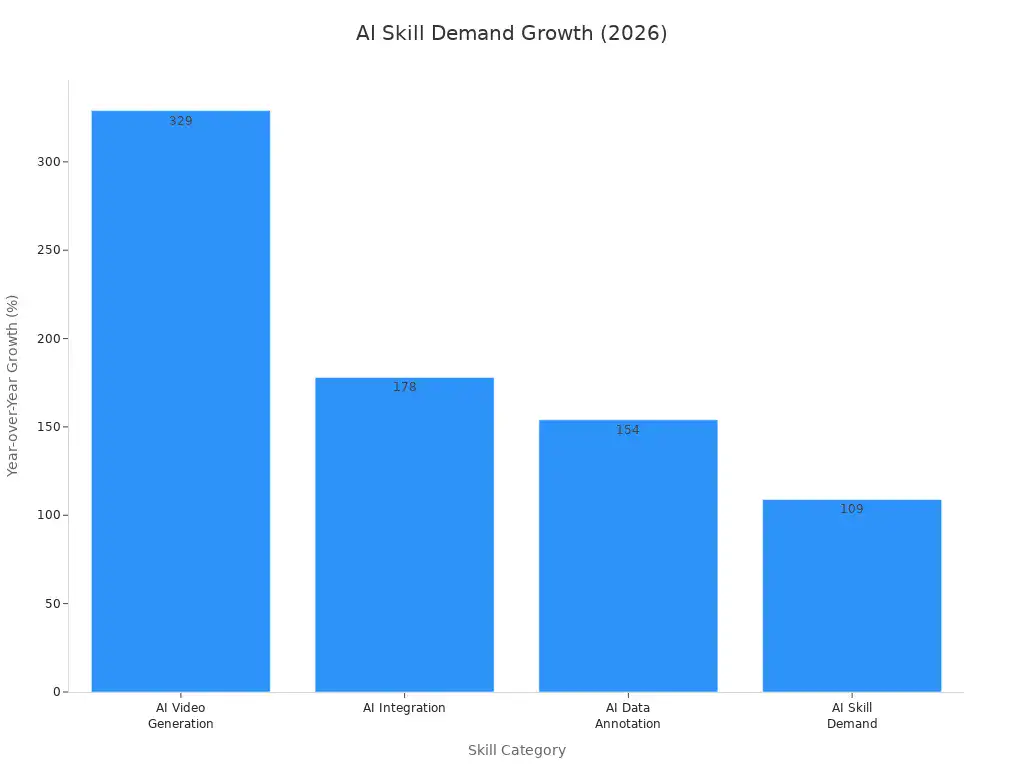
The job market has shifted beneath your feet. Upwork’s 2026 In-Demand Skills report shows full-stack development leads the pack, but AI-related skills are exploding. Demand for AI skills grew 109% year over year. AI video generation jumped 329%. AI integration rose 178%. AI data annotation climbed 154%. These numbers tell you exactly where to focus your learning.
You don’t need a computer science degree to start. Begin with one tool that solves a real problem in your daily workflow. Maybe you automate client emails or streamline your travel planning. As you build confidence, expand into prompt engineering or AI-assisted content creation. The key is consistent practice. Set aside thirty minutes each day to experiment with new features. That habit compounds quickly.
BreakOutwards’ Nomad Academy offers structured courses that teach AI literacy alongside remote work fundamentals. You learn practical skills like building location-independent income streams and managing projects across time zones. The courses start at just $5.99, making education accessible no matter where your travels take you. You gain the confidence to adapt as technology evolves.
Creative Problem-Solving and Human-Centric Abilities
AI handles precise tasks brilliantly. OpenAI’s GDPval framework confirms this. But AI scores lower on subjective dimensions like cultural relevance, emotional impact, and brand authenticity. Those remain human territories. Your creativity draws on personal experiences, memories, and emotions. A song about heartbreak carries different weight when the artist truly felt it. AI can only mimic patterns within its programming.
The data backs this up. Human-generated content achieves 20-25% higher audience response metrics than AI-generated material. In fashion retail, personal styling remains human-led because clients trust human judgment for emotionally significant decisions. Healthcare shows the same pattern. 95% of patient interactions still involve humans, with AI confined to administrative support. Empathy cannot be automated.
Your edge comes from combining both worlds. Use AI for research, drafting, and data analysis. Apply your human judgment for strategy, storytelling, and relationship building. This blend makes you invaluable. You become the person who knows which questions to ask, not just how to execute. That skill travels well across borders and industries.
The future belongs to those who treat AI as a collaborator, not a competitor. Your creativity, empathy, and adaptability remain irreplaceable assets.
Invest in these human skills deliberately. Practice active listening during client calls. Seek feedback on your creative work. Push yourself into unfamiliar situations that require quick thinking. These abilities grow stronger with use, and they set you apart in a crowded market.
Future Predictions for Digital Nomads

Remote Work Opportunities in 2026
The remote landscape in 2026 tells a complicated story. Remote and hybrid roles now represent 40% of new U.S. job postings. That sounds promising. But the reality is shifting beneath your feet. In Q2 2026, 87% of job postings were fully on-site. Only 10% were hybrid, and a mere 3% were fully remote. Compare that to Q4 2025, when fully in-office roles sat at 65%. The reversal is stark. Employers are pulling workers back. About 36% report increasing required on-site days over the past year.
Yet opportunity still exists for digital nomads. The sectors hiring remotely have expanded far beyond tech. Healthcare, finance, engineering, and even defense now offer location-independent positions. Companies like TELUS, Elevance Health, Lockheed Martin, Transcom, UnitedHealth Group, General Dynamics, BELAY, Centene Corporation, General Electric, and U.S. Bank lead the hiring charge. Veteran remote-friendly employers like SAP and Stride have appeared on FlexJobs’ top list every year since 2014. That consistency signals genuine commitment, not a passing trend.
Salary data adds another layer. Amazon, Google, and Microsoft recruit remote professionals with salaries ranging from $80,000 to $100,000. Digital marketing roles pay 15% more remotely than in-office. Your earning potential actually increases when you work from anywhere. The challenge lies in finding those roles among the noise.
Job seekers are paying attention. About 46% of professionals plan to look for a new role in H2 2026. Nearly 39% cite remote flexibility as their primary motivation. And 64% say work-life balance and remote options would push them to switch jobs. The demand for flexibility remains strong, even as employers resist. That tension creates a unique window for you. Companies that embrace remote work will attract top talent. Those that don’t will struggle to retain skilled workers.
AI-Driven Platforms and the Global Talent Market
Agentic AI is reshaping how you find work. These autonomous systems don’t just match resumes to job descriptions. They negotiate timelines, verify credentials, and even handle initial client communication. You wake up to a fully vetted project proposal waiting in your inbox. The platform has already checked the client’s payment history and confirmed the scope. Your role becomes oversight and final approval.
This trend of agentic AI with human oversight creates a powerful dynamic. The AI handles the tedious parts of job hunting. You focus on building relationships and delivering exceptional work. The intersection of AI and remote work opens new doors while introducing fresh challenges. You must verify that AI-generated opportunities align with your values and goals. Blind trust in automation leads to mismatched projects and wasted time.
The global talent market becomes more accessible through these platforms. You compete with professionals worldwide, but you also access clients worldwide. Your location no longer determines your opportunities. A strong portfolio and reliable wifi matter more than your passport. The best platforms reward consistency and quality, not geographic proximity.
For digital nomads, this means more control over your career trajectory. You choose projects that match your skills and interests. You set your own rates based on global benchmarks. You build a reputation that follows you across borders. The nomad lifestyle becomes more sustainable when AI handles the administrative burden.
The key is staying adaptable. Learn to work alongside AI agents rather than against them. Understand their limitations and your advantages. Your creativity, judgment, and emotional intelligence remain irreplaceable. AI can draft a proposal, but only you can build trust with a client. That human connection drives long-term success in this evolving landscape.
The future belongs to nomads who treat AI as a collaborator, not a competitor. Your adaptability becomes your greatest asset.
Long-stay destinations will benefit most from this shift. When AI handles routine work, you can settle into one place for months. You build deeper community connections and reduce travel stress. Your living costs stabilize, and your productivity increases. The slowmad approach pairs perfectly with AI-driven efficiency. You gain the best of both worlds: freedom and stability.
AI is your tool, not your replacement. The future belongs to digital nomads who embrace continuous learning and experiment boldly with new tools. Double down on your human skills—creativity, empathy, and judgment remain irreplaceable.
Start small. Pick one AI tool that solves a real problem in your daily workflow. Join a community like BreakOutwards, explore Nomad Academy courses, and build your remote work toolkit step by step. Your workspace can be anywhere with strong wifi.
The intersection of AI and digital nomads creates unprecedented freedom. Long-stay travel becomes sustainable. Your lifestyle gains depth. Remote opportunities expand daily. The future of digital nomadism is brighter and more flexible than ever—go claim it.
FAQ
Do I need technical skills to use AI tools as a digital nomad?
No. Most AI tools work with simple prompts and drag-and-drop interfaces. Start with free versions of ChatGPT or Zapier. You’ll learn by doing. Nomad Academy offers beginner-friendly courses starting at $5.99 if you want structured guidance.
Which countries offer the best digital nomad visas?
Portugal, Spain, Thailand, and Croatia lead the pack. Each program has different income requirements and stay durations. Most let you remain for six months to two years. Check each country’s official immigration website for current rules before booking your flight.
How much can I earn as a remote AI Engineer?
The average base salary hits $180,173, with total compensation reaching $202,573. Entry-level positions start around $100,000. Experienced engineers earn up to $245,000. You don’t need to live in a tech hub to land these roles.
Will AI replace my job as a digital nomad?
AI handles routine tasks like email sorting and research. It cannot replicate your creativity, empathy, or judgment. Human-generated content still outperforms AI by 20-25% in audience engagement. Your unique perspective keeps you valuable.
How do I start using AI to simplify my travel workflow?
Pick one problem to solve first. Maybe you hate booking flights or managing client emails. Choose a tool like Zapier or Notion AI that addresses that specific pain point. Set aside thirty minutes daily to experiment. Small steps compound into major time savings.