
Nepal Digital Nomad Visa 2026: The Complete Guide for Remote Workers
The dream of working remotely from the base of the Himalayas is closer to reality than ever. In 2026, Nepal is set to launch its highly anticipated Digital Nomad Visa, opening new doors for online professionals seeking adventure and tranquility. For years, digital nomads have been drawn to Nepal for its low cost of living, warm community, and breathtaking landscapes. But until now, staying beyond a short tourist visa meant complex paperwork or border runs.
This guide breaks down everything you need to know about the Nepal Digital Nomad Visa for 2026. From eligibility requirements to application steps, costs, and what daily life is really like for remote workers in Nepal, you’ll get the facts you need to make an informed decision.
You’ll also discover practical tips, common mistakes to avoid, and a real comparison with other Asian nomad hotspots. Whether you’re a freelance developer, content creator, or startup founder, you’ll see why Nepal could be your next base.
What Is The Nepal Digital Nomad Visa?
Nepal’s Digital Nomad Visa is a new type of residence permit designed for remote workers, freelancers, and entrepreneurs who earn income online from outside Nepal. Unlike tourist visas, which generally only allow short stays (usually 30–90 days), this visa lets digital nomads live and work legally in Nepal for up to one year, with the possibility to renew.
The main goals of this program are to:
- Attract skilled, tech-savvy professionals who contribute to the local economy
- Position Nepal as a competitive destination for the global remote work community
- Support sustainable tourism and cultural exchange
The visa is not for people who want to work for local Nepali companies or take jobs from the local workforce. Instead, it’s tailored for people earning remotely—whether running their own online business, freelancing on global platforms, or working for a foreign employer.
Why Nepal Is Attractive For Digital Nomads
Before diving into the details of the visa, let’s look at why so many digital nomads are eyeing Nepal in 2026.
Unique Advantages
- Affordable living: Nepal offers a very low cost of living. In Kathmandu, a comfortable apartment can cost as little as $250–400/month. Daily expenses like food, transportation, and coworking spaces are also budget-friendly.
- Inspiring scenery: Few countries offer the mountain views and hiking opportunities of Nepal. You can spend weekends trekking in the Himalayas or exploring ancient temples.
- Welcoming community: Nepalis are known for hospitality. There’s also a growing international community of expats and digital workers.
- Adventure and culture: From paragliding in Pokhara to yoga retreats, Nepal offers activities for every taste.
- Time zone: Nepal Standard Time (UTC+5:45) is manageable for coordinating with clients in both Europe and Asia.
Digital Infrastructure
Internet speeds in major cities like Kathmandu and Pokhara now reach 40–100 Mbps, with reliable fiber connections available in most urban areas. Mobile data is cheap and widely available. Power cuts are less common than in the past, especially in tourist districts.
Practical Examples
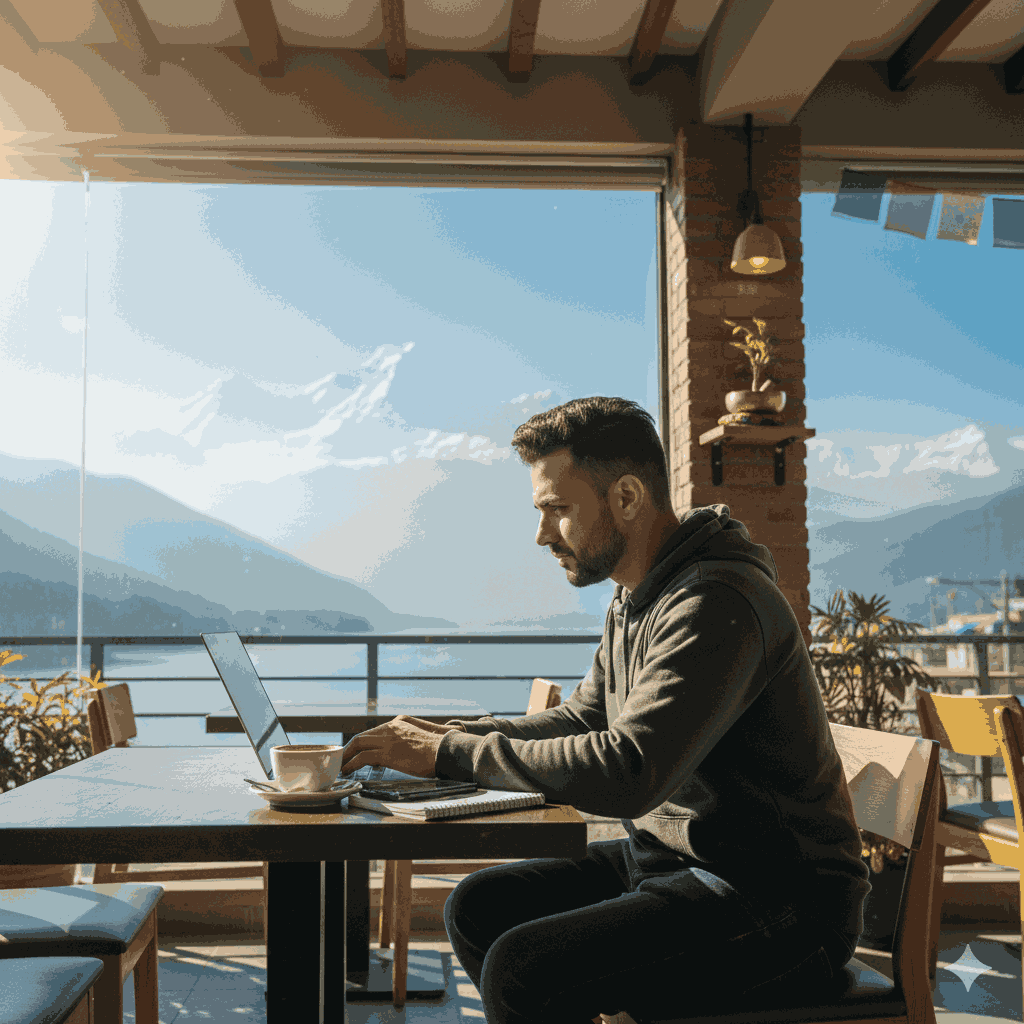
- A freelance designer based in Kathmandu spends under $1000/month, including rent, food, coworking, and travel.
- A remote developer from Germany organizes his work hours in the morning, then explores local markets and trails in the afternoon.
- A content creator splits time between bustling city life and peaceful mountain retreats, using mobile hotspots to stay connected.
Credit: exploreallaboutnepal.com
Who Is Eligible For The Nepal Digital Nomad Visa?
To apply for the Nepal Digital Nomad Visa in 2026, you’ll need to meet specific criteria. The government aims to attract genuine remote professionals while preventing abuse.
Basic Requirements
- Non-Nepali citizenship: The visa is open to all foreign nationals except those from countries under special restrictions.
- Proof of remote income: You must show evidence of earning at least $2000/month (or equivalent in another currency) from a source outside Nepal.
- Valid passport: Your passport should have at least 18 months validity from your planned entry date.
- Health insurance: You need international health insurance covering your entire stay in Nepal.
- Clean criminal record: A police clearance certificate from your home country is required.
- No local employment: You cannot take jobs with Nepali companies or work for local clients.
Special Cases
- Family members: Spouses and dependent children can apply as part of your application, but will not have work rights.
- Multiple nationalities: Dual citizens must apply with the same passport they use to enter Nepal.
Non-obvious insight: Digital nomads with inconsistent income should prepare at least six months of bank statements showing regular payments, as random large deposits may trigger extra checks.
How To Apply For The Nepal Digital Nomad Visa
The application process is mostly online, but some steps require in-person appointments at your nearest Nepali embassy or consulate.
Step-by-step Guide
- Gather documents: Prepare your passport, proof of income, health insurance, police clearance, and a digital photo.
- Apply online: Visit the official government portal (expected to launch at Nepal Immigration) and complete the Digital Nomad Visa application form.
- Upload documents: Scan and upload all required documents in PDF or JPEG format.
- Pay the fee: The application fee is $300 (non-refundable), payable by credit card or bank transfer.
- Wait for approval: Most applications are processed within 2–4 weeks, but it can take longer during high season.
- Schedule embassy appointment: If approved, book an appointment at your nearest Nepali embassy or consulate for an interview and biometric data.
- Receive your visa: After the in-person appointment, you’ll get a visa sticker in your passport.
- Arrive in Nepal: You have 90 days to enter Nepal after your visa is issued.
Tip: Start your application at least 3 months before you plan to move to Nepal to avoid delays.
Required Documents
- Copy of valid passport
- Proof of income (bank statements, contracts, payslips)
- Proof of international health insurance
- Police clearance certificate (issued within last 6 months)
- Recent passport-sized photo
- Proof of accommodation booking (hotel, Airbnb, or rental agreement)
What If You’re Rejected?
If your application is refused, you’ll receive a letter explaining the reasons. Common issues are missing documents, unclear income sources, or problems with insurance. You can appeal the decision or reapply with updated paperwork.
Costs And Fees
Understanding the full costs helps you budget properly for your Nepal stay.
Visa Fees
- Application fee: $300 (non-refundable)
- Visa issuance fee: $200 (payable after approval)
- Renewal fee: $250 per year
Additional Costs
- Police clearance: $30–$100 (depends on country)
- Health insurance: $40–$80/month for global nomad coverage
- Document translations: $10–$30 per page (if not in English)
Living Costs In Nepal (2026)
Here’s a realistic monthly budget for a digital nomad in Kathmandu:
| Expense | Average Monthly Cost (USD) |
|---|---|
| Private Apartment (1BR) | $300 |
| Coworking Membership | $75 |
| Utilities & Internet | $60 |
| Food & Groceries | $180 |
| Transport | $40 |
| Leisure/Travel | $120 |
| Total | $775 |
Non-obvious insight: Many digital nomads underestimate the cost of renewing official documents (such as police clearance or insurance proof) every year—plan for these hidden expenses.
Benefits Of The Nepal Digital Nomad Visa
The new visa offers several advantages over regular tourist or business visas.
Key Benefits
- Long-term stay: Live in Nepal for up to 12 months, with easy renewal options.
- No border runs: Avoid the hassle and cost of leaving and re-entering for visa extensions.
- Legal work status: Work online without worrying about violating local laws.
- Family-friendly: Bring your partner and kids, so you don’t have to choose between work and family.
- Access to local services: Open a local bank account, sign rental contracts, and join coworking spaces with less paperwork.
Limitations
- Cannot work for local Nepali companies
- Not a path to permanent residency or citizenship
- Income must come from outside Nepal
Practical Example: A remote project manager from the US uses his digital nomad visa to spend a full year in Nepal, organizing video calls from a Pokhara lakeside café and hiking on weekends—no more worrying about expiring tourist visas.
Credit: www.escapeartist.com
Comparison With Other Asian Digital Nomad Visas
Nepal’s visa is not the only option for remote workers in Asia. Here’s how it stacks up against other regional programs:
| Country | Minimum Income Requirement | Visa Duration | Cost (Application + Issuance) | Family Inclusion |
|---|---|---|---|---|
| Nepal | $2,000/month | 12 months (renewable) | $500 | Yes |
| Thailand | $3,000/month | 1–5 years | $600–$1,200 | Yes |
| Malaysia | $2,000/month | 12 months | $600 | Yes |
| Indonesia (Bali) | $2,000/month | 6–12 months | $400–$700 | Yes |
| Georgia | $2,000/month | 12 months | Free | No |
Non-obvious insight: Nepal’s lower cost of living often offsets its moderate visa fees—over a year, you can save more compared to pricier countries like Thailand or Indonesia.
Life In Nepal As A Digital Nomad
Once you have your visa, what is day-to-day life really like as a remote worker in Nepal?
Where To Live
- Kathmandu: The capital, with the best digital infrastructure, plenty of coworking spaces, and a lively expat scene.
- Pokhara: Known for its scenic lake and mountain views, popular with creatives and those seeking a relaxed pace.
- Lalitpur/Patan: Quieter than Kathmandu but close to the city, with a strong arts and café culture.
- Chitwan: For those who prefer wildlife and a slower, rural lifestyle.
Coworking And Internet
Coworking spaces are growing fast in Kathmandu and Pokhara. Most offer fast Wi-Fi, ergonomic chairs, and community events. Prices range from $60–$100/month.
Popular coworking spaces include:
- WorkAround (Kathmandu)
- Regus (Kathmandu)
- HUB (Pokhara)
Internet in urban areas is reliable, but power cuts or slowdowns do happen during storms or maintenance. Many nomads use a backup 4G SIM card as insurance.
Community And Networking
Nepal’s nomad community is small but friendly. Facebook groups, WhatsApp chats, and regular meetups help you connect and share tips. Many local expats organize hiking trips, language exchanges, and skill-sharing sessions.
Practical tip: Join local Slack groups or attend coworking space events to quickly build your network.
Leisure And Travel
Nepal is a paradise for adventure lovers. After work, you can:
- Hike or mountain bike in the hills around Kathmandu
- Go paragliding or boating in Pokhara
- Visit UNESCO World Heritage sites like Bhaktapur or Pashupatinath
- Join yoga or meditation retreats
Traveling within Nepal is affordable, but roads can be slow and bumpy. Domestic flights between cities are fast but can be delayed by weather.
Health And Safety
Nepal is generally safe, but traffic can be chaotic. Use taxis or rideshare apps for comfort. Good hospitals are available in major cities, but bring any special medications with you.
Air pollution can be an issue in Kathmandu, especially in winter. Choose accommodation with air purifiers or stay in greener areas.
Non-obvious insight: Many digital nomads find productivity increases in Nepal due to fewer urban distractions and the calming effect of nature.
Common Mistakes To Avoid
- Assuming your tourist visa is enough: Working online on a tourist visa risks fines or deportation. Always use the digital nomad visa.
- Not checking health insurance coverage: Some global policies exclude Nepal—read the fine print before you apply.
- Underestimating travel times: Nepal’s roads are slow; allow extra time for getting between cities or to the airport.
- Ignoring air quality: Invest in a mask or air purifier if you have respiratory issues.
- Forgetting backups: Keep a backup power bank and SIM card for internet outages.
- Not budgeting for renewals: Renewal fees, insurance, and police checks add up over time.
How To Make The Most Of Your Stay
- Learn basic Nepali phrases: Locals appreciate the effort and it helps in daily life.
- Explore beyond Kathmandu and Pokhara: Smaller towns like Bandipur or Lumbini offer different perspectives.
- Participate in local festivals: Experience Nepal’s rich culture by joining in on Dashain, Tihar, or Holi celebrations.
- Volunteer: Some nomads find meaning by helping at local NGOs or teaching digital skills.

Credit: exploreallaboutnepal.com
Real Stories: Digital Nomads In Nepal
- Sophie, 34, UK: “I came for the trekking, but stayed for the community. My productivity soared because I felt so inspired.”
- Li, 29, China: “Living in Pokhara costs less than half what I paid in Bali, and the views are just as good. The visa makes life so much easier.”
- Carlos, 40, Spain: “I was worried about internet, but my coworking space never let me down. I love the balance between city and nature.”
Renewal And Extension Rules
If you want to stay longer than one year, the process is simple but requires fresh documents:
- Apply online at least 60 days before your visa expires.
- Submit updated proof of income, insurance, and a new police certificate.
- Pay the renewal fee of $250.
- Most renewals are approved within 3 weeks.
Tip: Staying on a digital nomad visa does not count towards permanent residency. If you want to move to Nepal long-term, explore other visa options.
Nepal Digital Nomad Visa Vs. Tourist Visa
Here’s a direct comparison for clarity:
| Feature | Digital Nomad Visa | Tourist Visa |
|---|---|---|
| Duration | 12 months (renewable) | Up to 90 days |
| Remote Work Legal? | Yes | No |
| Family Inclusion | Yes | No |
| Cost | $500/year | $50–$125 |
| Local Services Access | Yes | Limited |
Non-obvious insight: Digital nomads on tourist visas often face problems opening bank accounts or signing rental contracts—another reason the digital nomad visa is worth it.
Frequently Asked Questions
How Long Does It Take To Get The Nepal Digital Nomad Visa?
Most applications are processed in 2 to 4 weeks, but plan for up to 2 months in case of high demand or missing documents.
Can I Apply For The Visa While I Am Already In Nepal?
No. As of 2026, you must apply from outside Nepal and receive approval before entering the country.
Does The Digital Nomad Visa Allow Me To Pay Taxes In Nepal?
No. As long as your income comes from outside Nepal and you are not employed locally, you do not pay Nepali income tax. Always check tax rules in your home country.
Can I Bring My Spouse And Children On The Visa?
Yes. Spouses and dependent children can be included in your application, but they cannot work in Nepal.
What Happens If I Lose My Remote Job During My Stay?
You must maintain the minimum income ($2,000/month) and valid insurance. If your income drops, inform immigration immediately—failing to do so may result in visa cancellation.
Nepal’s Digital Nomad Visa in 2026 is a game-changer for remote workers seeking a unique blend of adventure, affordability, and community. With its new program, the Himalayan nation joins the ranks of Asia’s top digital nomad destinations—offering legal security, long-term stability, and a chance to experience one of the world’s most inspiring countries while working online.
If you’re ready for a year of mountains, culture, and productivity, Nepal’s digital nomad visa could be your next big step.